FOR EDUCATORS OF CATTARAUGUS AND ALLEGANY COUNTIES.
  • Innovative Teaching
  • About
  • Contact
  • CABOCES.ORG/iss
  • Calendar of Events
  • AdvancingSTEM

Innovative Teaching

For Educators of Cattaraugus and Allegany Counties
We've Moved!

Our CA BOCES Innovative Teaching Blog has moved to a new location as of July 1, 2024. Please access the same great stories from around the Cattaraugus-Allegany BOCES region at our new location: CA BOCES Success Stories,
 https://casuccessstories.weebly.com

How to Analyze Informational Mentor Texts for Teaching Points in Writer's Workshop

2/4/2014

 
Picture
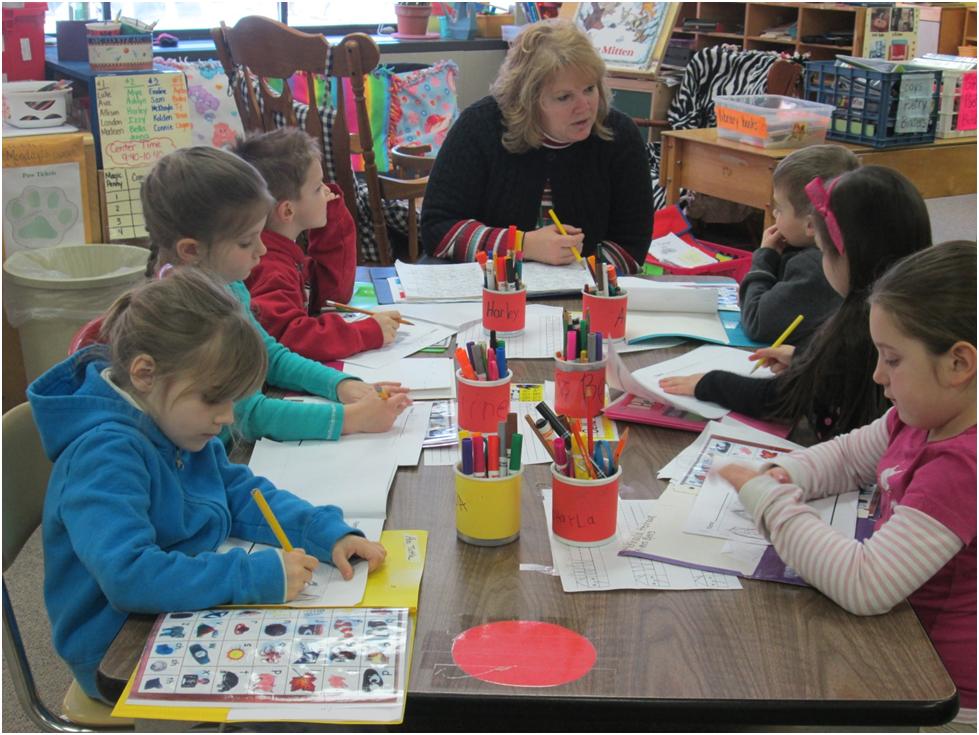
(Lisa Byers, a Kindergarten teacher at Arcade Elementary School confers with her students)

This past October, I had the opportunity to attend a week at the Writer’s Workshop Coaching Institute at Columbia University Teachers College.  One of the highlights of an exceptionally informative week was attending a workshop with Carl Anderson.  For those of you that haven’t heard of Carl Anderson, he is an author and literacy consultant who has written several books that give useful ideas for effectively conferring with students about their writing.  Two books in particular that provide useful, effective, and practical tips and strategies are: How’s it Going?  A Practical Guide to Conferring with Student Writers  and Assessing Writers.    
Elementary classrooms once focused primarily on instruction using narrative texts as mentors in reading and writing. Since Shift One now requires a “Balance of Literary and Informational Texts,” Carl’s workshop specifically addressed how teachers can analyze informational mentor texts for teaching points in WWS for both mini lessons and conferencing looking through the particular lenses of: meaning, structure, detail, voice, and conventions. 

Why use mentor texts in mini lessons and writing conferences?  Carl explained that the text is used to model for students both “envisionment” and “revision.”  Envisionment focuses on immersing students in a genre by reading mentor texts that demonstrate features of that type of writing.  It helps students to envision the draft they’re going to write, imagine the shape of the draft and its features, and enables students to draw upon specific aspects of craft while building a repertoire of craft options.  At the same time, the text can be used specifically for revision (making changes to a draft) and serves as a model of options for how a draft could go differently.  Before the unit, the teacher chooses one text that has many, many teaching points within it that will serve as the mentor text to use and refer back to in both mini lessons and student writing conferences throughout the unit.
  • Meaning:  What point is the author making?  What meaning does the author communicate in the text?   There are reasons and purpose behind why authors choose certain things include in their books.  What is the author saying about the topic?  
  • Structure:  All the parts in some way help the reader get the point  What is the structure of the text?  How does each part of the text develop the meaning?  What kind of lead is in the text?  How does the author use it to communicate meaning?  Which parts of the text are important to developing the meaning?  Point out to students that every page supports what the main idea is and just as every part of the book they are writing should support their topic/focus.  When revising, the student has two choices: make the part fit the content of the book or cut it out.

So, how specifically can teachers look at structure with their students?

1. Look at leads with kids:
Name what kind of lead it is:
  • Repetition:  In this type of lead, the author is talking to the reader as if the reader is doing something with the topic.  Ex. “Find the grasshopper on a leaf.”
  • “Grasshoppers are hard to catch.” (talking to reader and stating a fact)

2.  Look at endings with kids
3.  How does the writer transition the piece?
This can be as simple as the turn of the page serving as the transition from part to part. If a student “mushes” together the facts all on one page, show them how to separate parts of the piece (we do this to help the reader understand) It is like when a person holds your hand to cross the street (they guide you across) You guide the reader through your book with the structure.
4.  How does the illustration help communicate the meaning? (focus within the pictures to highlight a specific part of the text)
5.  What kind of text features did the author include?
Fun facts: connected to a specific part of the book and supports the text (not random)
Detail:
Writers have a repertoire of details they use to strengthen their narrative writing such as:
  • Action , Dialogue, Thinking, Feeling, Setting Character                                
But, what kinds of details does the author typically use in Nonfiction?  FACTS. But, how can we categorize the types of facts used in most nonfiction texts?
1.  Action Facts: Ex. “Most grasshoppers eat plants and leaves”  (what something does)
2.  Descriptive facts (what something looks like)
(this may include numbers, or number facts that include size or color facts)
3.  Definition fact (uses vocabulary)  Ex. “Baby grasshoppers are called nymphs”
Precision of facts gives kids an option: Look at mentor text first to show this!!!
Voice:
What voice techniques does the author use?
  • Punctuation (! End with a crash like some songs do)
  • All caps to accentuate certain parts of the text(Ex. In Nicola Davies Shark!)
Conventions:
Bring a book to show spacing, punctuation, etc.

Conferring effectively with students is one of the most challenging aspects of writing workshop for teachers to feel comfortable implementing.  So next time you are looking for a way to improve your student conferences or mini-lessons, choose a book that you have analyzed in regard to meaning, structure, detail, voice, and conventions and watch your student writing pieces soar!!

By: Colleen Root/CABOCES Staff Development


Comments are closed.

    Follow us on
    ​social media

    Want to attend a professional development session offered by Instructional Support Services?  Click here to review our catalog of professional development offerings.  
    Need 24/7 access to digital classroom resources?
    Click here to access "no charge" digital resources for you and your students.

    Categories

    All
    1:1
    3d Modeling
    7 Habits
    AdvancingSTEM
    Akom
    Allegany County
    Allegany Limestone
    Alternate Assessment
    Andover
    Angela Stockman
    Anti Bullying
    Anti-bullying
    Anxiety
    APPR
    Art
    Artificial Intelligence
    Arts
    Arts In Education
    Artspower
    Arts Power
    Assessments
    Audiobooks
    Belfast
    Benchmarks
    Blended Learning
    Bolivar Richburg
    Book Study
    BPO
    Brain Based
    Breakout EDU
    Ca Boces
    Canva
    Career Day
    Career Resources
    Castle Learning
    CA Today
    Cattaraugus Little Valley
    CBT
    Clc
    CLC (collaborative Learning Community)
    Climate
    Coding
    Collaborative Project
    Common Core
    Community And Schools Together
    Community Schools
    Community Schools Service Showcase
    Community & Schools Together Conference
    Cooperative Learning
    COSER 506
    Co-teaching
    Covey
    Credit Recovery
    CRSE
    Cte
    Cuba Rushford
    Cuba-Rushford
    Curriculum Modules
    Dasa
    Data
    Dave Ruch
    Delevan Elementary
    Distance
    Distance Learning
    Diversity
    Driver Education
    Drone
    Drones
    Dyslexia
    Early Childhood
    Ebooks
    Ela
    ELA CLC
    ELA Learning Standards
    Ellicottville
    Environmental Education
    Environmental Science
    Eresources
    Esl
    Esports
    Executive Function
    Family Engagement
    Field Trips
    Field Trip Zoom
    Fillmore
    Film Festival
    Flipgrid
    Fossils
    Franklinville
    French
    Friendship
    Game Based Learning
    Game-based Learning
    Genesee Valley
    Global History
    Global Studies
    Grit
    Growth Mindset
    Health
    Hinsdale
    Houghton College
    Innovation
    Instruction
    Ipad
    Jcc
    Khan Academy
    Kimberly Morrow
    Kits
    Language Line
    Leadership
    Learning Resources
    Lego League
    Libraries
    Library
    Literacy
    Maker
    Math
    Math Clc
    Math Modules
    Matt Miller
    Media
    Mental Health
    Microsoft
    Microsoft 365
    Microsoft Teams
    Minecraft Education
    Model Schools
    Moodle
    Moodle/Mahara
    Music
    Nerdle
    Newsbank
    New Teacher Academy
    Next Generation Science
    Odyssey Of The Mind
    Olean
    Online Class
    Osmo
    Osmos
    Overdrive
    Padlet
    Parents
    Parent University
    PBL
    PE
    Physical Education
    Pioneer
    Pioneer Central School
    Pixar In A Box
    Play
    Portville
    Poverty Simulation
    Power Apps
    Power Automate
    Power Teaching
    Pre K
    Pre-K
    Professional Development
    Professional Development]
    Randolph
    Randolph Academy
    Reading
    Regents
    Regents Exam
    Remote Learning
    Resilience
    Restorative Circles
    Restorative Practice
    Re-write
    Rocket League
    Salamanca
    Scdn Social Studies
    Scholastic Challenge
    School Library
    Schoology
    Science
    Science Investigations
    Science Of Reading
    Scio
    Seesaw
    Sel
    Self Care
    Sharepoint
    SLO's
    SNAP
    Social Emotional
    Social Emotional Learning
    Social-emotional Learning
    Social Studies
    Sora
    Spanish
    Special Education
    Standards
    Star Lab
    Stem
    STEM Challenge
    Student
    Student Competitions
    Student Programming
    Student Programs
    Summer School
    Summer Tech Camp
    Tcif
    Teacher Academy
    Teaching
    TeachingBooks
    Teach Like A Champion
    Technology
    Theaterworks
    TheaterWorks USA
    Theatre
    The Mailbox
    Tier 1
    TITC
    Trauma
    TRLE
    Universal Design For Learning
    US History
    VEX
    Video Conferencing
    Virtual Field Trip
    Virtual Scholastic Challenge
    Wellsville
    West Valley
    Whitesville
    Why Try
    Writing
    Zoom
    Zulama

    Archives

    May 2024
    April 2024
    March 2024
    January 2024
    December 2023
    November 2023
    October 2023
    September 2023
    August 2023
    July 2023
    June 2023
    May 2023
    April 2023
    March 2023
    February 2023
    January 2023
    December 2022
    November 2022
    October 2022
    September 2022
    August 2022
    July 2022
    June 2022
    May 2022
    April 2022
    March 2022
    February 2022
    January 2022
    December 2021
    November 2021
    October 2021
    September 2021
    August 2021
    July 2021
    June 2021
    May 2021
    April 2021
    March 2021
    February 2021
    January 2021
    December 2020
    November 2020
    October 2020
    September 2020
    August 2020
    July 2020
    June 2020
    May 2020
    April 2020
    March 2020
    February 2020
    January 2020
    December 2019
    November 2019
    October 2019
    September 2019
    August 2019
    July 2019
    June 2019
    May 2019
    April 2019
    March 2019
    February 2019
    January 2019
    December 2018
    October 2018
    September 2018
    August 2018
    July 2018
    June 2018
    May 2018
    April 2018
    March 2018
    January 2018
    December 2017
    November 2017
    October 2017
    August 2017
    July 2017
    June 2017
    May 2017
    April 2017
    March 2017
    February 2017
    January 2017
    November 2016
    October 2016
    August 2016
    June 2016
    April 2016
    March 2016
    February 2016
    January 2016
    November 2015
    October 2015
    August 2015
    June 2015
    April 2015
    March 2015
    February 2015
    January 2015
    December 2014
    November 2014
    October 2014
    September 2014
    June 2014
    May 2014
    April 2014
    March 2014
    February 2014
    January 2014
    November 2013

Powered by Create your own unique website with customizable templates.
  • Innovative Teaching
  • About
  • Contact
  • CABOCES.ORG/iss
  • Calendar of Events
  • AdvancingSTEM