FOR EDUCATORS OF CATTARAUGUS AND ALLEGANY COUNTIES.
  • Innovative Teaching
  • About
  • Contact
  • CABOCES.ORG/iss
  • Calendar of Events
  • AdvancingSTEM

Innovative Teaching

For Educators of Cattaraugus and Allegany Counties
We've Moved!

Our CA BOCES Innovative Teaching Blog has moved to a new location as of July 1, 2024. Please access the same great stories from around the Cattaraugus-Allegany BOCES region at our new location: CA BOCES Success Stories,
 https://casuccessstories.weebly.com
Coding Beyond Kindergarten: Empowering Creativity at Fillmore Central

3/4/2024

0 Comments

 
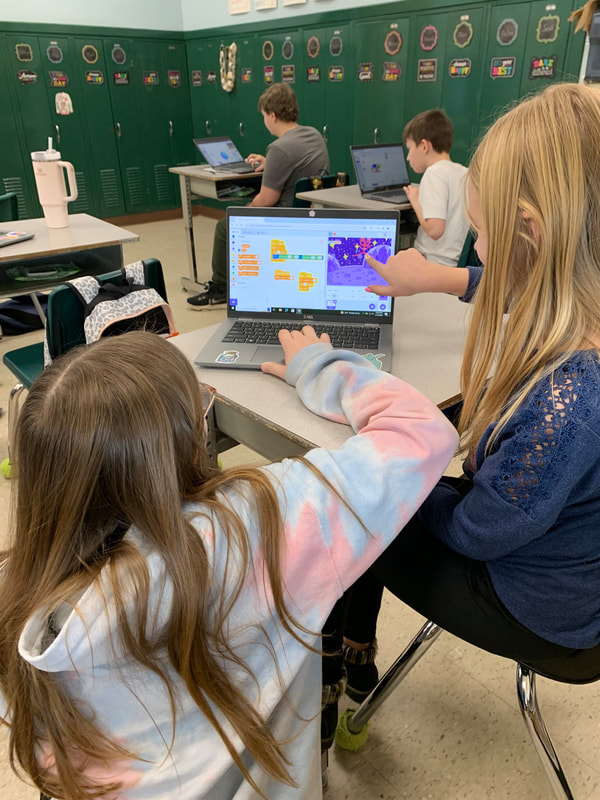
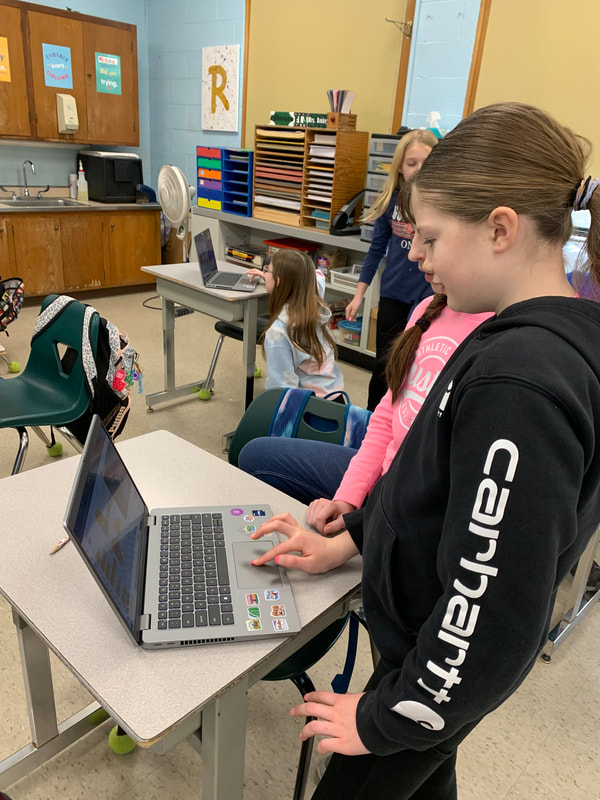
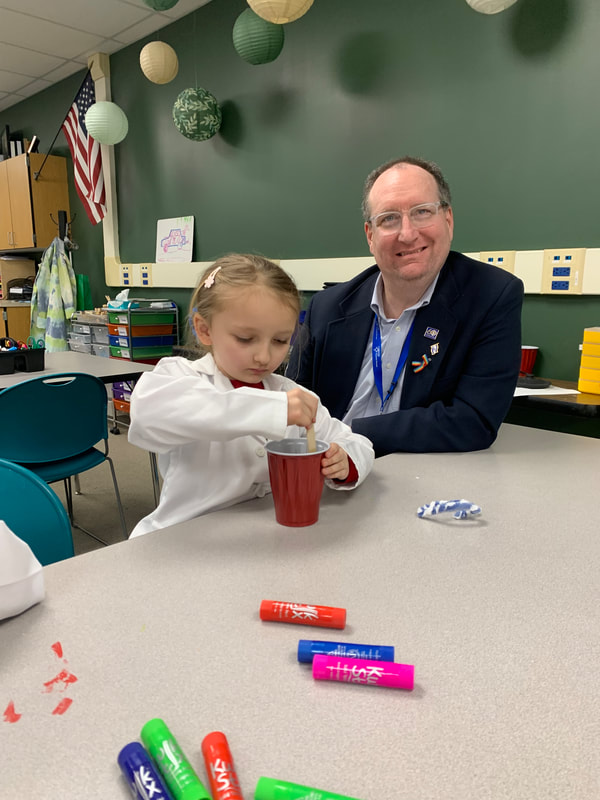
Forget the stereotypical image of lines of code on a black screen. At Fillmore Central School in Fillmore, NY, a vibrant classroom pulsates with the creativity and problem-solving skills of 5th and 6th graders, their minds diving into the world of code. Leading the charge are Desi Miller, a passionate STEAM teacher, and Rick Weinberg, a collaborator sharing the vision of empowering young minds through digital creation.
Picture
But why coding, and why at this age? The answer lies in the transformative potential it holds. Coding isn't just about writing commands; it's about unlocking a creative language that allows students to translate their ideas into interactive experiences, games, and even animations. As Desi puts it, "Coding sparks a fire in students. It becomes more than just learning a skill; it's about expressing their individuality and having a voice in the digital world."

But how do you bridge the gap between eager minds and complex concepts? This is where the work of Jean Piaget, the pioneering developmental psychologist, becomes crucial. He emphasized the role of concrete experiences in early learning, highlighting how children build mental frameworks ("schemata") through exploration and experimentation.

Desi and Rick have embraced this philosophy. Instead of dry lectures, they use Scratch, a visual programming language where colorful blocks represent commands. Students manipulate these blocks, crafting stories, animating characters, and even designing games – all while grasping underlying coding principles.
Picture
Picture
This "learning by doing" approach aligns perfectly with Piaget's theories. Through trial and error, children observe, adjust, and refine their understanding. Each successful execution of code becomes a mini victory, fueling their curiosity and encouraging them to push further.

The impact is remarkable. Students aren't just mastering coding; they're honing essential 21st-century skills like critical thinking, collaboration, and communication. They learn to break down problems, think logically, and work together to achieve their digital goals.

Naturally, challenges arise. Translating complex concepts requires adaptation and patience. Rick emphasizes, "It's all about fostering a growth mindset. We celebrate small wins, encourage exploration, and create a safe space for experimentation."

And the results speak for themselves. From intricate digital art pieces to creating their own video game, students showcase their newfound skills and confidence. They're no longer passive consumers of technology; they're creators, actively shaping their digital experiences.
​
Desi and Rick's collaborative effort at Fillmore Central School is a shining example of the power of coding education. By harnessing Piaget's insights and the engaging nature of Scratch, they're nurturing a generation of digital innovators equipped to tackle challenges and shape the future, not just consume it. Who knows, perhaps these young minds will be the ones building the next groundbreaking technologies that change the world!

By:  Rick Weinberg, CA BOCES Professional Development
0 Comments

Exploring the Literary Landscape: A Comprehensive ELA Curriculum Review

3/4/2024

0 Comments

 
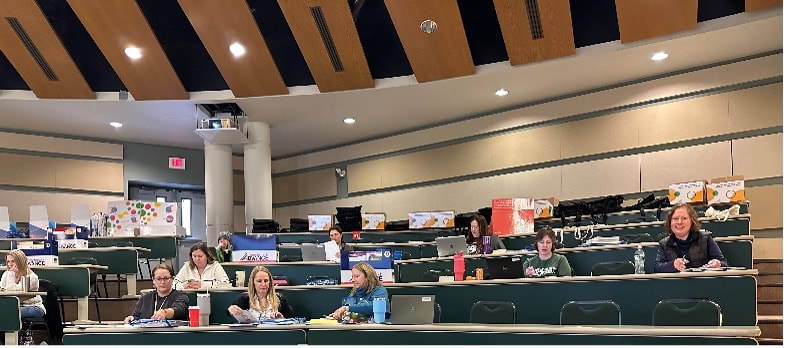
In the world of education, we strive to ensure our curriculum provides the highest quality of instruction to our students. The Olean City School District has committed to this objective and is currently reviewing their ELA curriculum to ensure the needs of their students are met. The district started an ELA curriculum review at the beginning of the year led by a team of general education teachers, reading teachers, and administration. This team of educators have used the guidance of The Reading League’s Curriculum Evaluation Guidelines to measure the effectiveness of the current curricula being used in the district. Currently the committee is reviewing new curriculum to implement in the 2024-2025 school year that follows the guidelines outlined through this evaluation.
​
Why use The Reading League’s Curriculum Evaluation Guidelines:
The Reading League's Curriculum Evaluation Guide offers a comprehensive framework for assessing ELA instructional materials that is grounded in research and practical experience. Designed to aid educators in evaluating components such as phonological awareness, phonics, fluency, vocabulary, language comprehension, reading comprehension, writing instruction, and assessment, this guide provides a systematic approach to curriculum analysis. By leveraging this resource, districts like Olean can conduct thorough evaluations, identifying strengths and areas for improvement in their ELA curricula.
Picture
Picture
Want to know more about The Reading League’s Curriculum Evaluation Guide or look further into the process of ELA curriculum selection? I’d love to help! Email me at [email protected]

​By: Janelle Freer, CA BOCES Professional Development
0 Comments

Five shifts from balanced literacy to the Science of Reading

3/4/2024

0 Comments

 
Let’s explore a few changes you can make as you implement Science of Reading instruction. 

  1. Use decodable readers, not leveled readers. Decodable readers—simple books that focus on the letter-sound correspondences that students have learned—support students in developing their phonics knowledge, rather than guessing or using picture cues. They support the systematic approach to instruction aligned with the Science of Reading. 
  2. Provide all students with dedicated, systematic phonics instruction, not mini-lessons or isolated phonics instruction. Effective phonics instruction—for every student—takes time and is deliberately sequenced. (At least 60 minutes a day is required for solid, systematic foundational skills development.) Phonics instruction should also be part of a comprehensive Science of Reading approach to literacy instruction.
  3. Help students with phonics-based scaffolds, not three-cueing or word guessing. This is the part where learning to decode rewires students’ brains for reading. It requires that you provide scaffolds and ask students to practice sounding it out rather than responding to context clues.
  4. To build comprehension skills, develop students’ knowledge. The Science of Reading shows that literacy skills grow best on a foundation of knowledge. In other words, the more you know, the easier and faster you can understand texts you encounter in the world. Spend two or three weeks on focused literary, social studies, and science topics. The topics should build on each other and deepen understanding and vocabulary. This approach can replace studying disconnected topics and practicing comprehension skills without attention to background knowledge. 
  5. Follow a clear instructional path, not a choose-your-own-adventure model. The Science of Reading supports a cohesive curriculum with explicit teaching and guidance. It gives students multiple instructional pathways and gives every student the support they need now without waiting for intervention. 

By: Tessa Levitt, CA BOCES Professional Development
0 Comments

Grade 5 and Grade 8 NYSSLS Science Tests 2024

3/4/2024

0 Comments

 
Forty-five educators attended the most recent informational session about the new NYS grade 5 and grade 8 science assessments. For those that were unable to attend, this article will serve as a summary of that day.

What will be on the test?
The Grade 5 test will include all science standards from the 3-5 grade band and the Grade 8 test will include all science standards from the 6-8 grade band. According to the Science Test Guidance document released by the state, each domain of science (Life, Physical, Earth & Space, and Engineering) will be represented on the test proportionally to its appearance in the standards. These two documents (ELS and ILS) can help to see the breakdown of what Science Practices, Crosscutting Concepts, and which science domains will be emphasized most on the respective exams. Test questions will be written at a level 2, 3, and 4 from the Performance Level Descriptions (PLDs).

​How can we prepare our students?
Many teachers are looking for a vocabulary list, a set of practice questions, or a list of “what our kids need to know”, however the new science standards (NYSSLS) do not operate as a factual list of what students need to know, rather how they figure things out.
​
Teachers should be using the Science Practices and Crosscutting Concepts (two of the three dimensions) regularly in class to have students figure out the “facts” of science. If explicit teaching of these two dimensions has not been happening up to this point, NOW IS THE TIME TO START. If nothing else, teachers should be using the Science Practices and Crosscutting Concepts language as they engage in science content leading up to the exam.
Science Practices (SEPs)
Crosscutting Concepts (CCCs)
  • Asking Questions (and DefiningProblems)
  • Developing and Using Models
  • Planning and Carrying Out Investigations
  • Analyzing and Interpreting Data
  • Constructing Explanations (and Designing Solutions)
  • Using Mathematics and Computational Thinking
  • Engaging in Argument from Evidence
  • Patterns
  • Cause and Effect
  • Scale, Proportion, and Quantity
  • Systems and System Models
  • Energy and Matter
  • Structure and Function
  • Stability and Change
  • Obtaining, Evaluating, and Communicating Information
  • Patterns
  • Cause and Effect
  • Scale, Proportion, and Quantity
  • Systems and System Models
  • Energy and Matter
  • Structure and Function
  • Stability and Change
There is not a review book that can be purchased with practice questions. The state has released 4 clusters of questions that strongly resemble the way questions will look on the actual exam. Teachers can have students access these questions and work through them on the site – probably the best method to practice CBT skills as well. Teachers may also print these out, or they can be found in Castle Learning. Other ways to practice questions directly related to NYSSLS is using Inner Orbit, an online assessment-building platform accessible to all students and teachers at the 5th and 8th grade levels.

I have also gone through the NYS Science Learning Standards with a comb (not necessarily fine-toothed) to create vocabulary lists at each grade band level. I have created this more as a vertical alignment tool than a test-prep tool. I would strongly encourage teachers to start with the SEP and CCC vocabulary before worrying as much about the DCI (Disciplinary Core Idea) vocabulary.

Other preparation resources:
  • Grade 5 Science Review - Student Packet
  • Grade 5 Science Review - Teacher Guide
  • Grade 5 Science Review – related Gifs and images
  • Mini Lessons for explicitly teaching SEPs and CCCs
  • Performance Level Descriptions (PLDs) - Elementary
  • Performance Level Descriptions (PLDs) - Intermediate

How do the NYS Science Investigations tie into the exam?
The NYS Science Investigations that were released in October 2022 are to be used as performance activities at the end of the unit of study related to the tasks. These should be run as any science activity is run with all students in the classroom – including scaffolding for a variety of needs and appropriate modifications for students with IEPs. Every student should have exposure to all four of these Investigations prior to taking the Grade 5 or Grade 8 NYS Science Assessment. It is in the student’s best interest that they are proficient at these activities, however it is not required. Approximately 15% of the test will be indirectly related to the Investigations. The questions will NOT directly ask about the Investigations, but rather will be within the realm of the content in the Investigations, as well as the skills that are practiced by the students.

By:  Kelli Grabowski, CA BOCES Learning Resources
0 Comments

OVERView:  New Algebra I Regents Exam

3/3/2024

0 Comments

 
Picture
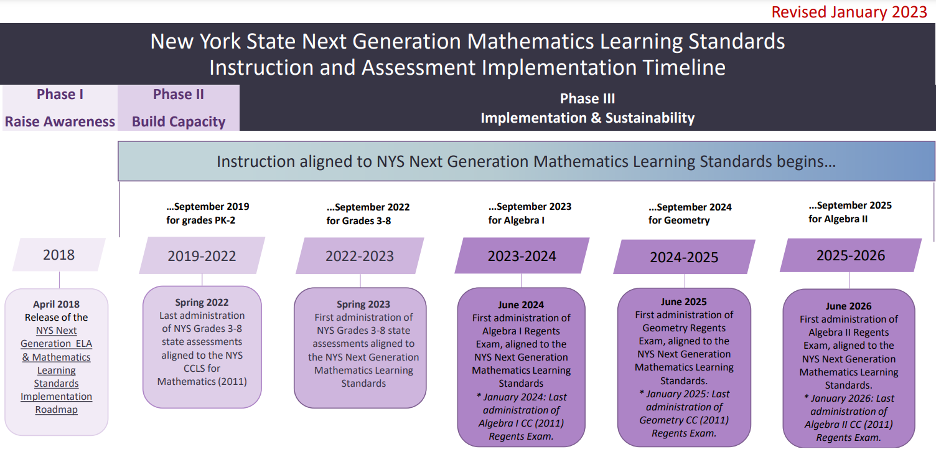
On June 4th, 2024 New York State will welcome the new Algebra I Regents exam based on the Next Generation Standards!  The full list of June Regents exam dates and times can be found here.  With COVID pushing the start time for all Next Gen assessments back a few years, this assessment will be the first High School Math adventure after Common Core. The good news is that not much will change according to NYSED Math representatives.  In fact, before with any new test implementation they would keep the old test around for an extra year for those that need to retake it.  Since the change is so minimal, the January 2024 Common Core Algebra I test was the end of that exam.  We’re now moving forward to Next Gen.   ​

Picture
Why the early administration of this exam?   
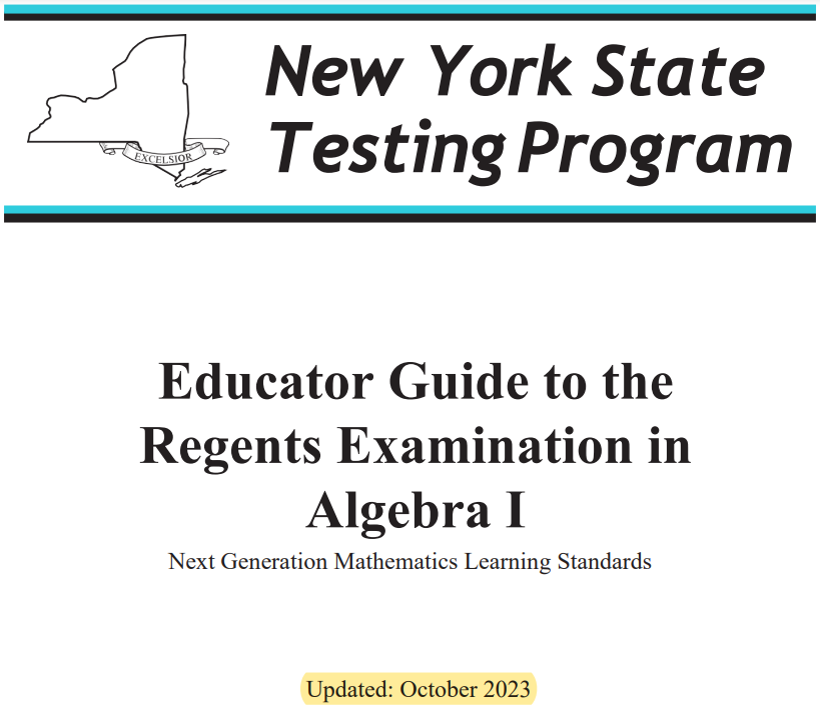
The state will get the data on all students and set the scaled score (it will still be out of 100).  Unlike the 3-8 assessments where the scaled scores go up to 500+ and is different in each grade, Regents exams are scaled to 100.  New York State will set the thresholds for the 5 levels of proficiency (grades 3-8 have 4 levels of proficiency) and the results will be known by the last rating day, Wednesday, June 25th.  In other words, there will be a total of 82 points on this year’s Algebra I exam and then a student will get a scaled score out of 100.  If they get 82 out of 82, they’ll get a scaled score of 100 and for each point they miss their scaled score will drop, or in some cases stay the same.  You can find more details in the Algebra I Educator Guide, however, the cut scores for those 5 proficiency levels will not be known until the end of June. 
Picture
What are districts doing to prepare for this new test?   
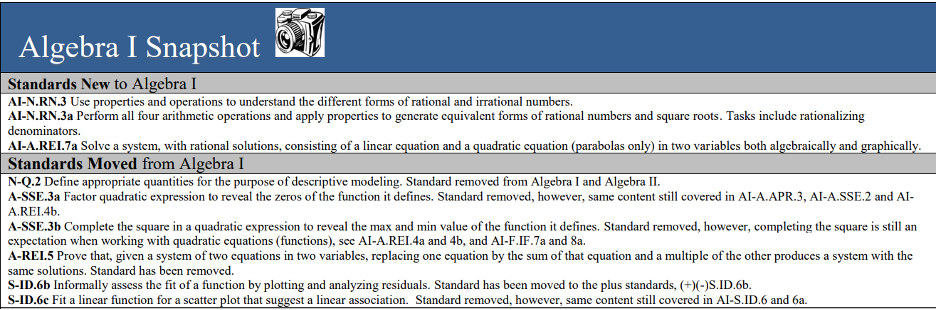
For the most part, using old Regents questions, being aware of the changes by using the Algebra I crosswalk comparison to the Common Core standards or the Snapshot of the year (which also includes Highlights/Instructional Considerations noted by NYSED).  Teachers in our region have come to the face-to-face 6-12 Math CLC sessions and the online Zoom sessions to stay in the loop, however, nothing new has been added.  During the CABOCES December Curriculum Forum, the NYSED math reps re-emphasized that the change is very little and that there will be no more released questions to help prepare, just the five questions at the end of the Algebra I Educator Guide.  CABOCES has also shared other items to help teachers prepare off of the NYSED Math page, like the Performance Level Descriptions (PLD’s) to understand the level of questions that could be asked by each of the five performance levels.  For all of the New York State Next Generation Math standards (Grades PreK-Algebra II) you can use this enhanced document. 
Picture
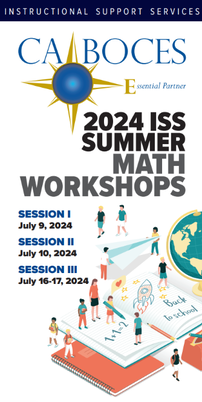
We will be offering summer trainings for Math, you can find them in this pamphlet.  Along with our July 9th day with Paul Riccommoni from Penn State around the importance of Vocabulary in Math as well as retention of information for students.  If you have any other Math questions feel free to reach out to Jillian Putnam for elementary Math at [email protected] and for middle/high school, Mark Carls at [email protected]. 

By:  Mark Carls, CA BOCES Professional Development
0 Comments

Unveiling the CA Today Podcast: Your Gateway to Instructional Innovation

3/3/2024

0 Comments

 
Picture
Exciting news is brewing in the realm of instructional support and professional development! The CA Today Podcast is halfway through a fresh new season, packed with invaluable insights, innovative strategies, and engaging updates tailor-made for educators across the region.  

This podcast serves as a beacon of inspiration and knowledge, featuring several members of the Instructional Support Services Team who rotate as hosts. Each episode is meticulously crafted to display a diverse array of instructional tools, strategies, and updates pertinent to teachers and administrators from kindergarten to twelfth grade. 

Throughout this podcast, you can expect to embark on a journey of exploration and discovery, delving into diverse topics that shape the landscape of modern education. From the mesmerizing world of robotics to the transformative power of educational technology, the CA Today Podcast leaves no stone unturned in its quest to empower educators with the insights and resources they need to excel in their roles. 

In the episodes released so far this season, our hosts have covered a wide range of captivating topics: 
  • VEX Robotics: Join hosts Rick Weinberg and Lindsay Simpson as they highlight the benefits of robotic programs in schools through interviews at a 2023 VEX tournament, showcasing the creativity and critical thinking skills fostered through VEX competitions. 
  • Mock Scholastic Challenge: Clay Nolan and Karen Insley unravel the mysteries of Learning Resources available to educators, offering invaluable support and guidance to enhance the learning journey. 
  • Transforming Science with the NYSSLS Standards: Lindsay Simpson and Kelli Grabowski explore the evolution of science instruction in alignment with the New York State Science Learning Standards (NYSLSS), shedding light on innovative methods and essential resources to enrich science education. 
  • Back to Basics: The Evolution of Teaching Writing: Sarah Cartmill engages in an insightful discussion with a university professor, examining the evolution of writing instruction amidst the digital age and technological advancements. 
  • Meet Summer Tech Camp 2023 Keynote Speakers: Nate and Angie Ridgeway: Brooke Neamon and Rick Weinberg delve into the world of educational technology with Natie and Angie Ridgways, uncovering best practices and groundbreaking insights to engage students in the classroom. 
  • FETC Tech Highlights: Lindsay Simpson and Brooke Neamon provide a comprehensive overview of tech tools highlighted at the FETC Conference, offering a glimpse into the innovative innovations shaping the future of education. 

The CA Today Podcast releases new episodes on the first Monday of every month, ensuring a steady stream of inspiration and knowledge for educators everywhere. You can tune in on various platforms including Apple Podcasts, Spotify, Amazon Music, and more! 
Remember, your feedback is invaluable! Be sure to rate and subscribe wherever you listen to podcasts to stay updated on the latest episodes. Follow this link to explore your favorite podcast platform: (https://podcasters.spotify.com/pod/show/ca-today)  

Embark on a journey of instructional innovation with the CA Today Podcast. Let's transform education together, one episode at a time. Happy listening!  

By:  Lindsay Simpson, CA BOCES Professional Development


0 Comments

Houghton University Opportunities Continue!

3/3/2024

0 Comments

 
The great opportunity for our participating district students to take advantage of earning college credits early is continuing this Spring and Summer!!

Learning Resources is continuing to partner with Houghton University Early College program which allows high school students to earn college credits to transfer with them as they graduate and enter college.

Spring Session is offering 11 courses, beginning May 13th and a registration deadline of May 3rd.  If you are interested in any of the courses below, follow this link to check into the course summary that is available.

Houghton Early College page:  https://www.houghton.edu/early-college/
  • Biblical Literature
  • Introduction to Nutrition
  • Interpersonal Communication
  • Introduction to Criminal Justice
  • Principles of Macroeconomics
  • Enduring Questions: The Modern World
  • History of Rock and Roll and Commercial Music
  • In Search of Justice
  • Introduction to Psychology
  • Science and Society: Video and Board Games
  • Professional Writing

Summer session is offering 9 courses beginning July 8 and a registration deadline of June 28. If you are interested in any of the courses below, follow this link to check into the course summary that is available.

Houghton Early College page:  https://www.houghton.edu/early-college/ 
  • Marketing Principles
  • Women in the Bible
  • Introduction to Communication
  • Introduction to CS Lewis Deep Magic lecture
  • Introduction to Film music
  • American political System
  • Developmental Psychology
  • Social Psychology
  • Introduction to Sociology
 
With that many courses there is certainly some topic that will appeal to many students, so be sure to contact the participating district Guidance office to get any students interested registered.

The classes have filled up quickly in the past sessions, so be sure not to wait until the last minute and miss out on this great opportunity!!
 
Please reach out to any of us at Learning Resources if you have any questions, we look forward to helping you. Below are a few of the available Learning Resources contacts to reach out to:
 
Clay Nolan: clay_nolan @caboces.org
Justin Shumaker: justin_shumaker @caboces.org
Lisa Scott: [email protected]

By Lisa Scott, CA BOCES Learning Resources
0 Comments

    Follow us on
    ​social media

    Want to attend a professional development session offered by Instructional Support Services?  Click here to review our catalog of professional development offerings.  
    Need 24/7 access to digital classroom resources?
    Click here to access "no charge" digital resources for you and your students.

    Categories

    All
    1:1
    3d Modeling
    7 Habits
    AdvancingSTEM
    Akom
    Allegany County
    Allegany Limestone
    Alternate Assessment
    Andover
    Angela Stockman
    Anti Bullying
    Anti-bullying
    Anxiety
    APPR
    Art
    Artificial Intelligence
    Arts
    Arts In Education
    Artspower
    Arts Power
    Assessments
    Audiobooks
    Belfast
    Benchmarks
    Blended Learning
    Bolivar Richburg
    Book Study
    BPO
    Brain Based
    Breakout EDU
    Ca Boces
    Canva
    Career Day
    Career Resources
    Castle Learning
    CA Today
    Cattaraugus Little Valley
    CBT
    Clc
    CLC (collaborative Learning Community)
    Climate
    Coding
    Collaborative Project
    Common Core
    Community And Schools Together
    Community Schools
    Community Schools Service Showcase
    Community & Schools Together Conference
    Cooperative Learning
    COSER 506
    Co-teaching
    Covey
    Credit Recovery
    CRSE
    Cte
    Cuba Rushford
    Cuba-Rushford
    Curriculum Modules
    Dasa
    Data
    Dave Ruch
    Delevan Elementary
    Distance
    Distance Learning
    Diversity
    Driver Education
    Drone
    Drones
    Dyslexia
    Early Childhood
    Ebooks
    Ela
    ELA CLC
    ELA Learning Standards
    Ellicottville
    Environmental Education
    Environmental Science
    Eresources
    Esl
    Esports
    Executive Function
    Family Engagement
    Field Trips
    Field Trip Zoom
    Fillmore
    Film Festival
    Flipgrid
    Fossils
    Franklinville
    French
    Friendship
    Game Based Learning
    Game-based Learning
    Genesee Valley
    Global History
    Global Studies
    Grit
    Growth Mindset
    Health
    Hinsdale
    Houghton College
    Innovation
    Instruction
    Ipad
    Jcc
    Khan Academy
    Kimberly Morrow
    Kits
    Language Line
    Leadership
    Learning Resources
    Lego League
    Libraries
    Library
    Literacy
    Maker
    Math
    Math Clc
    Math Modules
    Matt Miller
    Media
    Mental Health
    Microsoft
    Microsoft 365
    Microsoft Teams
    Minecraft Education
    Model Schools
    Moodle
    Moodle/Mahara
    Music
    Nerdle
    Newsbank
    New Teacher Academy
    Next Generation Science
    Odyssey Of The Mind
    Olean
    Online Class
    Osmo
    Osmos
    Overdrive
    Padlet
    Parents
    Parent University
    PBL
    PE
    Physical Education
    Pioneer
    Pioneer Central School
    Pixar In A Box
    Play
    Portville
    Poverty Simulation
    Power Apps
    Power Automate
    Power Teaching
    Pre K
    Pre-K
    Professional Development
    Professional Development]
    Randolph
    Randolph Academy
    Reading
    Regents
    Regents Exam
    Remote Learning
    Resilience
    Restorative Circles
    Restorative Practice
    Re-write
    Rocket League
    Salamanca
    Scdn Social Studies
    Scholastic Challenge
    School Library
    Schoology
    Science
    Science Investigations
    Science Of Reading
    Scio
    Seesaw
    Sel
    Self Care
    Sharepoint
    SLO's
    SNAP
    Social Emotional
    Social Emotional Learning
    Social-emotional Learning
    Social Studies
    Sora
    Spanish
    Special Education
    Standards
    Star Lab
    Stem
    STEM Challenge
    Student
    Student Competitions
    Student Programming
    Student Programs
    Summer School
    Summer Tech Camp
    Tcif
    Teacher Academy
    Teaching
    TeachingBooks
    Teach Like A Champion
    Technology
    Theaterworks
    TheaterWorks USA
    Theatre
    The Mailbox
    Tier 1
    TITC
    Trauma
    TRLE
    Universal Design For Learning
    US History
    VEX
    Video Conferencing
    Virtual Field Trip
    Virtual Scholastic Challenge
    Wellsville
    West Valley
    Whitesville
    Why Try
    Writing
    Zoom
    Zulama

    Archives

    May 2024
    April 2024
    March 2024
    January 2024
    December 2023
    November 2023
    October 2023
    September 2023
    August 2023
    July 2023
    June 2023
    May 2023
    April 2023
    March 2023
    February 2023
    January 2023
    December 2022
    November 2022
    October 2022
    September 2022
    August 2022
    July 2022
    June 2022
    May 2022
    April 2022
    March 2022
    February 2022
    January 2022
    December 2021
    November 2021
    October 2021
    September 2021
    August 2021
    July 2021
    June 2021
    May 2021
    April 2021
    March 2021
    February 2021
    January 2021
    December 2020
    November 2020
    October 2020
    September 2020
    August 2020
    July 2020
    June 2020
    May 2020
    April 2020
    March 2020
    February 2020
    January 2020
    December 2019
    November 2019
    October 2019
    September 2019
    August 2019
    July 2019
    June 2019
    May 2019
    April 2019
    March 2019
    February 2019
    January 2019
    December 2018
    October 2018
    September 2018
    August 2018
    July 2018
    June 2018
    May 2018
    April 2018
    March 2018
    January 2018
    December 2017
    November 2017
    October 2017
    August 2017
    July 2017
    June 2017
    May 2017
    April 2017
    March 2017
    February 2017
    January 2017
    November 2016
    October 2016
    August 2016
    June 2016
    April 2016
    March 2016
    February 2016
    January 2016
    November 2015
    October 2015
    August 2015
    June 2015
    April 2015
    March 2015
    February 2015
    January 2015
    December 2014
    November 2014
    October 2014
    September 2014
    June 2014
    May 2014
    April 2014
    March 2014
    February 2014
    January 2014
    November 2013

Powered by Create your own unique website with customizable templates.
  • Innovative Teaching
  • About
  • Contact
  • CABOCES.ORG/iss
  • Calendar of Events
  • AdvancingSTEM