
FOR EDUCATORS OF CATTARAUGUS AND ALLEGANY COUNTIES.
  • Innovative Teaching
  • About
  • Contact
  • CABOCES.ORG/iss
  • Calendar of Events
  • AdvancingSTEM

Innovative Teaching

For Educators of Cattaraugus and Allegany Counties
We've Moved!

Our CA BOCES Innovative Teaching Blog has moved to a new location as of July 1, 2024. Please access the same great stories from around the Cattaraugus-Allegany BOCES region at our new location: CA BOCES Success Stories,
 https://casuccessstories.weebly.com

Finding our Students in Ones and Zeros

10/23/2020

0 Comments

 
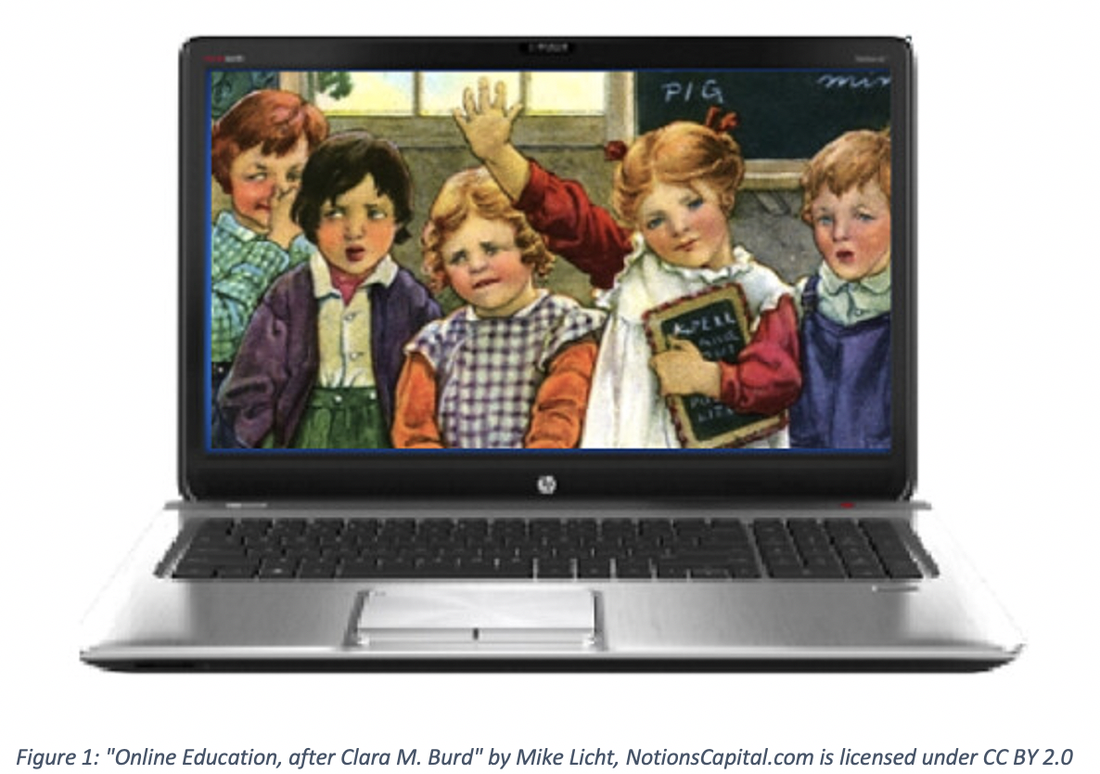
​We know that teacher immediacy and creating learning communities is essential for any successful and positive educational experience. Students may wonder—is my teacher interested in my life? does my teacher have a vested interest in my success? are my assignment good enough? do I feel like I am part of this class and that my presence matters?
 But what does teacher immediacy and community look like in a blended learning environment or even in a fully online, asynchronous course? How do we make sure that all our students, who we root for passionately, know that we are still there cheering them on and trying to protect and inspire them in the world of ones and zeros?
Picture
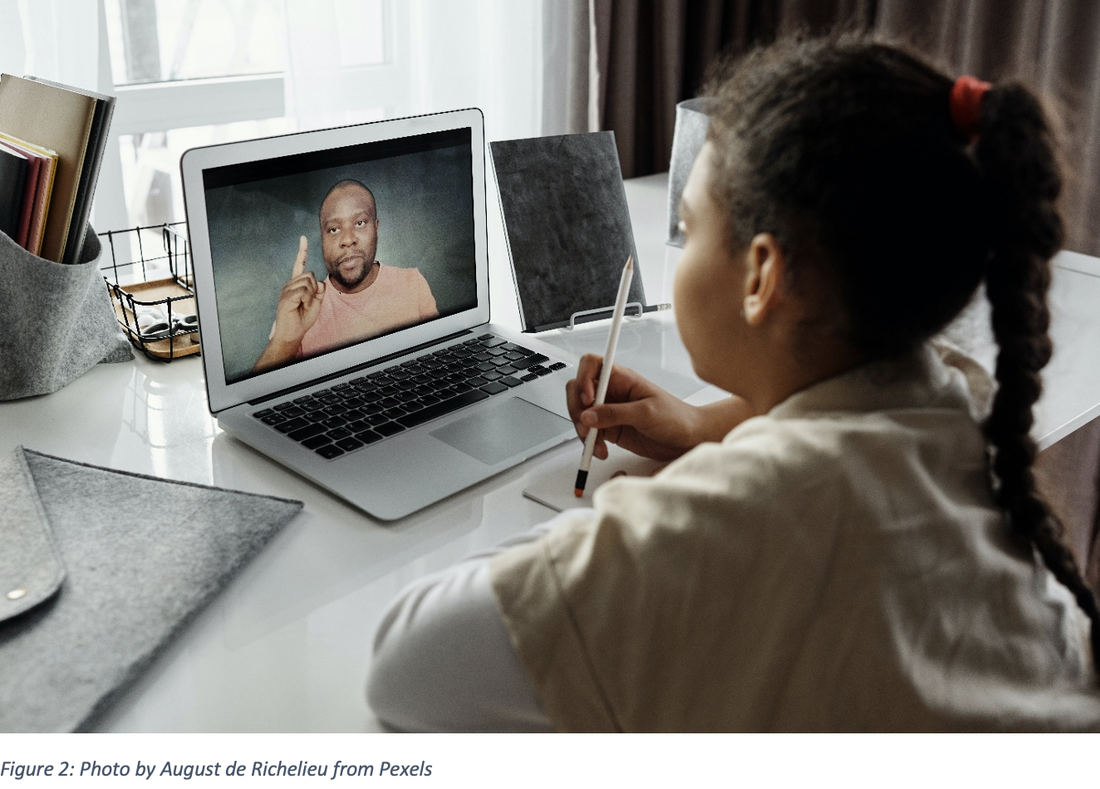
​In her blog, Rebecca Heiser (2019) notes that teacher immediacy is defined by Wiener and Mehrabian (1968) as “non-verbal and verbal queues and the psychological distance between the communicator and recipient,” which means that it is our job as teachers to make students feel like they are, figuratively, sitting on a beanbag in our virtual classrooms able to be seen and heard even when they are at home with headsets, on a videoconference call, or working in Moodle,  Schoology or Microsoft Classrooms. They are physically far away, but should feel as though they are able to pop into our rooms and share a moment of their day, happy or difficult, and that we will be there with joy or comfort, that they can ask a question and we will help guide them to an answer, that they still can communicate with their peers and collaborate in our classroom communities. As mentioned in Engaging the Online Learner: Activities and Resources for Creative Instruction, “…experienced online instructors have found that interaction is actually the essence of the course” (pg. 8). As teachers, we must come up with ways to make our students feel like we are right there even when we cannot be and that students’ peers are still their community and fellow collaborators.
Picture
So how do teachers create a community and make our presence known in an online educational setting? How do we use technology to bring us together even as we are asked to social distance and remain apart?  Like everything in education, making a connection to our students is the foremost priority.
One of the most important findings in online educational research is the importance of making our students feel that their teachers are immediately available even though that is not always feasible. Here are some introductory best practices (found through multiple sources listed at the end of this post) that I have used in my own online teaching and can be great starting points:

1.Respond as soon as possible to submissions, emails, and texts, but give a timeframe to accommodate your own time and needs. For example, “I will respond to your emails within 24 hours and I will respond to your assignment submissions within 3 days.”

2.Create discussion forums, but do not feel the need to respond to every student.  Instead, respond to a couple of different students in each forum, but respond deeply and thoroughly with comments, guiding questions, and outside resources. Students will see your presence and know that you are thinking about their answers but responding will not overwhelm you. Ask students to do the work and respond to classmates as well so that everyone is getting feedback and creating community at the same time.

3.Brainstorm virtually using chat boxes in synchronous videoconference situation or use shared documents or the top lines of discussion forums to answer and then be able to quickly review student ideas in asynchronous online course situations.

4.Give feedback using a variety of tools and methods. For example, try a short video answer to student questions. Use images that might help students understand a written explanation or to invite conversation. Record audio feedback so that students can hear tone and inflection. And of course, rely on text with email, and when it makes sense, set up a videoconference for more difficult or lengthy “in person” conversations.

5.Have set “office hours” where any student can meet you in a webinar during that time but let students know that they may end up meeting in a group. Set up separate individual conferencing sessions for more serious conversations and invite parents and guardians to join in.

6.Create spaces for students to just talk and be themselves but guide their chatter with some questions about the topics they are learning in classes or have conversations about events that they are still engaged in like music, sports, or clubs. Help students have productive conversations and share about their lives like they might done in person before class, in hallways, or when they stopped by to talk between classes. 

7.Set up group work with spaces like break-out rooms in Zoom. Mix and match the groupings or pairings.

8.Create shared documents or Wikis, perhaps even a blog or an online school newspaper where students create the news and stories that are important to them.

9.Create collaborative projects that feel like real-world experiences where students can use videoconferencing to showcase talents and creativity. 

10.Create safe social media spaces where students can collaborate and share projects that they have completed as well as share ideas and help one another when they get stuck on an assignment or project.

All these ways of communicating help create online community through teacher immediacy that make us feel like a whole that is working together again and gives us opportunities to be heard and seen in our digital lives.
​
References
Conrad, R-M., & Donaldson, J. (2011) Engaging the online learner: Activities and resources for creative instruction. San Francisco, CA: John Wiley & Sons.
Heiser, R. (2019, February 19) Social presence expectations in distance education. Retrieved from https://sites.psu.edu/rebeccaheiser/2019/02/19/social-presence-expectations-in-distance-education/
Ko, S., & Rossen, S. (2010) Teaching online: A practical Guide. New York, NY: Routledge.
Mattson, K. (2017) Digital citizenship in action: Empowering students to engage in online communities. Portland, OR: International Society for Technology in Education.
Rice, K. (2012) Making the move to k-12 online teaching: Research-based strategies and practices. Boston, MA: Pearson Education, Inc. 
 
​By: Christina McGee, CA BOCES Learning Resources
0 Comments

Your comment will be posted after it is approved.


Leave a Reply.

    Follow us on
    ​social media

    Want to attend a professional development session offered by Instructional Support Services?  Click here to review our catalog of professional development offerings.  
    Need 24/7 access to digital classroom resources?
    Click here to access "no charge" digital resources for you and your students.

    Categories

    All
    1:1
    3d Modeling
    7 Habits
    AdvancingSTEM
    Akom
    Allegany County
    Allegany Limestone
    Alternate Assessment
    Andover
    Angela Stockman
    Anti Bullying
    Anti-bullying
    Anxiety
    APPR
    Art
    Artificial Intelligence
    Arts
    Arts In Education
    Artspower
    Arts Power
    Assessments
    Audiobooks
    Belfast
    Benchmarks
    Blended Learning
    Bolivar Richburg
    Book Study
    BPO
    Brain Based
    Breakout EDU
    Ca Boces
    Canva
    Career Day
    Career Resources
    Castle Learning
    CA Today
    Cattaraugus Little Valley
    CBT
    Clc
    CLC (collaborative Learning Community)
    Climate
    Coding
    Collaborative Project
    Common Core
    Community And Schools Together
    Community Schools
    Community Schools Service Showcase
    Community & Schools Together Conference
    Cooperative Learning
    COSER 506
    Co-teaching
    Covey
    Credit Recovery
    CRSE
    Cte
    Cuba Rushford
    Cuba-Rushford
    Curriculum Modules
    Dasa
    Data
    Dave Ruch
    Delevan Elementary
    Distance
    Distance Learning
    Diversity
    Driver Education
    Drone
    Drones
    Dyslexia
    Early Childhood
    Ebooks
    Ela
    ELA CLC
    ELA Learning Standards
    Ellicottville
    Environmental Education
    Environmental Science
    Eresources
    Esl
    Esports
    Executive Function
    Family Engagement
    Field Trips
    Field Trip Zoom
    Fillmore
    Film Festival
    Flipgrid
    Fossils
    Franklinville
    French
    Friendship
    Game Based Learning
    Game-based Learning
    Genesee Valley
    Global History
    Global Studies
    Grit
    Growth Mindset
    Health
    Hinsdale
    Houghton College
    Innovation
    Instruction
    Ipad
    Jcc
    Khan Academy
    Kimberly Morrow
    Kits
    Language Line
    Leadership
    Learning Resources
    Lego League
    Libraries
    Library
    Literacy
    Maker
    Math
    Math Clc
    Math Modules
    Matt Miller
    Media
    Mental Health
    Microsoft
    Microsoft 365
    Microsoft Teams
    Minecraft Education
    Model Schools
    Moodle
    Moodle/Mahara
    Music
    Nerdle
    Newsbank
    New Teacher Academy
    Next Generation Science
    Odyssey Of The Mind
    Olean
    Online Class
    Osmo
    Osmos
    Overdrive
    Padlet
    Parents
    Parent University
    PBL
    PE
    Physical Education
    Pioneer
    Pioneer Central School
    Pixar In A Box
    Play
    Portville
    Poverty Simulation
    Power Apps
    Power Automate
    Power Teaching
    Pre K
    Pre-K
    Professional Development
    Professional Development]
    Randolph
    Randolph Academy
    Reading
    Regents
    Regents Exam
    Remote Learning
    Resilience
    Restorative Circles
    Restorative Practice
    Re-write
    Rocket League
    Salamanca
    Scdn Social Studies
    Scholastic Challenge
    School Library
    Schoology
    Science
    Science Investigations
    Science Of Reading
    Scio
    Seesaw
    Sel
    Self Care
    Sharepoint
    SLO's
    SNAP
    Social Emotional
    Social Emotional Learning
    Social-emotional Learning
    Social Studies
    Sora
    Spanish
    Special Education
    Standards
    Star Lab
    Stem
    STEM Challenge
    Student
    Student Competitions
    Student Programming
    Student Programs
    Summer School
    Summer Tech Camp
    Tcif
    Teacher Academy
    Teaching
    TeachingBooks
    Teach Like A Champion
    Technology
    Theaterworks
    TheaterWorks USA
    Theatre
    The Mailbox
    Tier 1
    TITC
    Trauma
    TRLE
    Universal Design For Learning
    US History
    VEX
    Video Conferencing
    Virtual Field Trip
    Virtual Scholastic Challenge
    Wellsville
    West Valley
    Whitesville
    Why Try
    Writing
    Zoom
    Zulama

    Archives

    May 2024
    April 2024
    March 2024
    January 2024
    December 2023
    November 2023
    October 2023
    September 2023
    August 2023
    July 2023
    June 2023
    May 2023
    April 2023
    March 2023
    February 2023
    January 2023
    December 2022
    November 2022
    October 2022
    September 2022
    August 2022
    July 2022
    June 2022
    May 2022
    April 2022
    March 2022
    February 2022
    January 2022
    December 2021
    November 2021
    October 2021
    September 2021
    August 2021
    July 2021
    June 2021
    May 2021
    April 2021
    March 2021
    February 2021
    January 2021
    December 2020
    November 2020
    October 2020
    September 2020
    August 2020
    July 2020
    June 2020
    May 2020
    April 2020
    March 2020
    February 2020
    January 2020
    December 2019
    November 2019
    October 2019
    September 2019
    August 2019
    July 2019
    June 2019
    May 2019
    April 2019
    March 2019
    February 2019
    January 2019
    December 2018
    October 2018
    September 2018
    August 2018
    July 2018
    June 2018
    May 2018
    April 2018
    March 2018
    January 2018
    December 2017
    November 2017
    October 2017
    August 2017
    July 2017
    June 2017
    May 2017
    April 2017
    March 2017
    February 2017
    January 2017
    November 2016
    October 2016
    August 2016
    June 2016
    April 2016
    March 2016
    February 2016
    January 2016
    November 2015
    October 2015
    August 2015
    June 2015
    April 2015
    March 2015
    February 2015
    January 2015
    December 2014
    November 2014
    October 2014
    September 2014
    June 2014
    May 2014
    April 2014
    March 2014
    February 2014
    January 2014
    November 2013

Powered by Create your own unique website with customizable templates.
  • Innovative Teaching
  • About
  • Contact
  • CABOCES.ORG/iss
  • Calendar of Events
  • AdvancingSTEM
